
Licenses will be revoked if rice exporters fail to report their inventory
Article content
According to Decree 107/2018, rice exporters were required to report to the Ministry of Industry and Trade on the actual amount of paddy and rice in stock for each type. This was to compile data for management purposes.
In Decree 01/2025, recently issued by the Government, rice exporters are now only required to report their paddy and rice inventory to the Ministry of Industry and Trade and the Department of Industry and Trade on a monthly basis, instead of weekly as currently required. They must also send a copy of the report to the Vietnam Food Association for data compilation. The new regulations will be applied from March 1st.
Businesses need to ensure mandatory rice reserves, meet technical standards for warehouses and milling facilities, and submit periodic reports. Within 45 days of receiving a license, the People's Committee of the province or city must direct the Department of Industry and Trade to conduct post-inspection of warehouses, milling facilities, and rice processing facilities to ensure they meet actual business conditions.
However, in reality, many traders had previously failed to comply with the reporting requirements of Decree 107, affecting rice exports.
Therefore, according to the new decree, those who do not comply with this regulation may have their certificates revoked. Specifically, the Ministry of Industry and Trade will consider revoking licenses for businesses that fail to submit reports within 45 days of receiving a reminder.
Authorities will also revoke export eligibility certificates for traders who falsely declare their storage facilities, milling and processing plants, or engage in other fraudulent activities to obtain licenses.
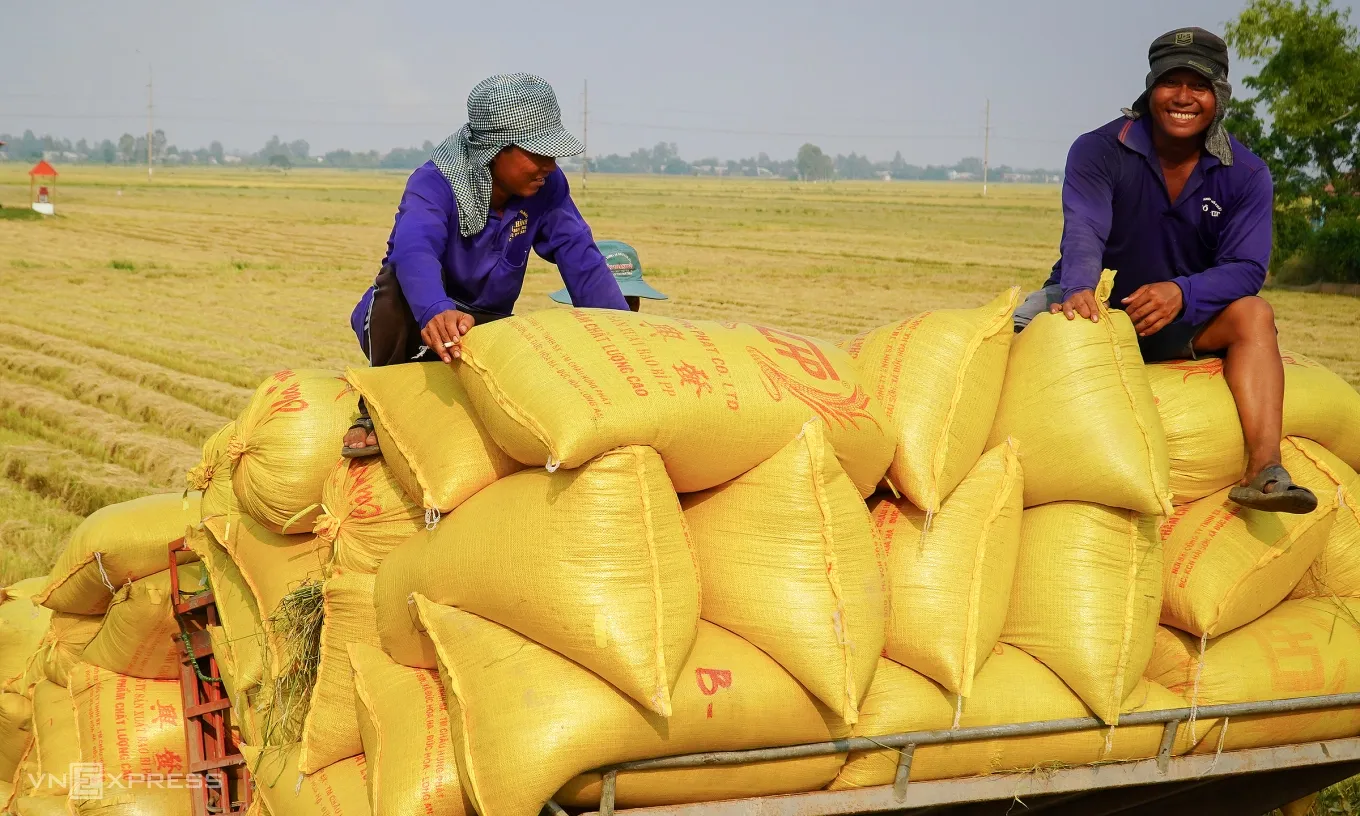
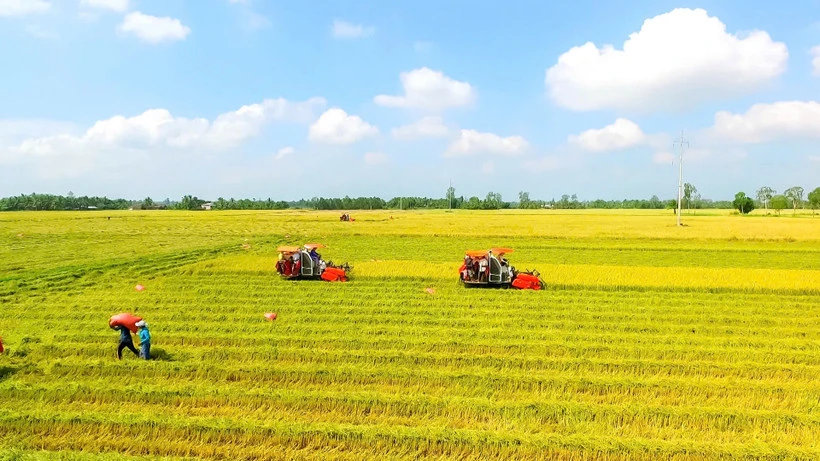
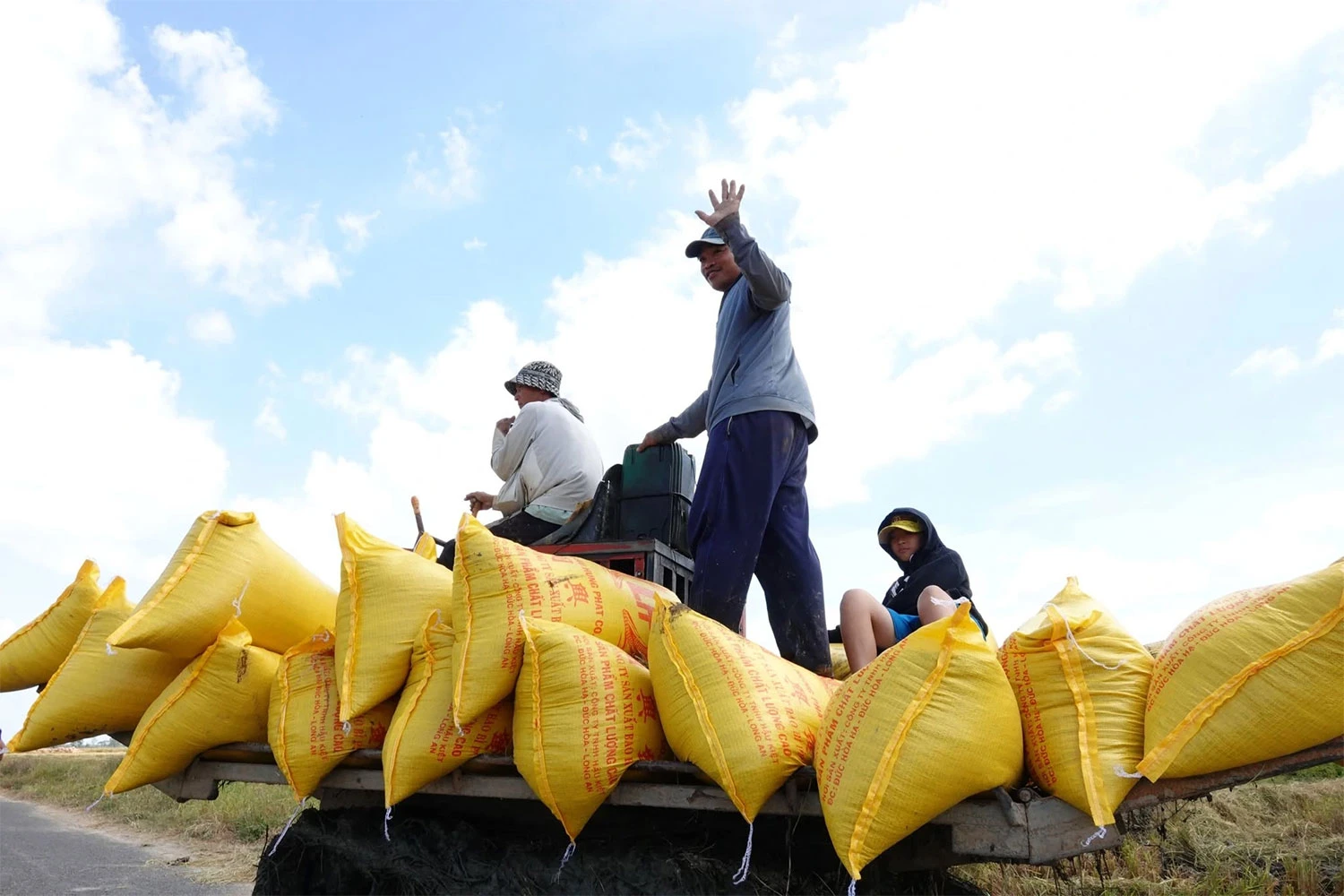
Can Tho farmers harvesting rice. Photo: Thuy Tien
According to Decree 01, traders of all economic sectors, if they meet the conditions and are granted a certificate, have the right to export rice. However, these traders will only be allowed to entrust or receive entrustment for export from other traders who have a certificate of eligibility for export. This is a new point compared to the regulations currently in effect.
In reality, many businesses cannot meet the conditions for exporting rice, so they entrust it to other entities for a fee of 1-5 USD per ton. That is, businesses with certificates of eligibility for export are now renting out these certificates and receiving a fee. This makes Vietnamese rice more expensive and harder to export, according to the Vietnam Chamber of Commerce and Industry (VCCI).
Thus, with the new regulations on entrustment and receiving entrustment, rice exporting traders will not be able to rent out their certificates to export on behalf of unqualified parties. Rice is a vital commodity for Vietnamese agriculture. Statistics from the Ministry of Agriculture and Rural Development show that in the past 11 months, the rice industry has achieved impressive results, with export turnover reaching US$5.3 billion, a 22.4% increase compared to the same period last year. This figure not only far surpasses the 2023 annual target but also sets a new record with a growth rate of 10.8%.
Source: https://vnexpress.net/